
Loyalty Programs for Cafés and Restaurants
September 19, 2026 · 4 min read
"Every sixth coffee is free": why simple punch-card programs work
Why a simple punch card still works so well: how to size the distance to the reward, work out its real cost — and why it's worth making digital in the first place.
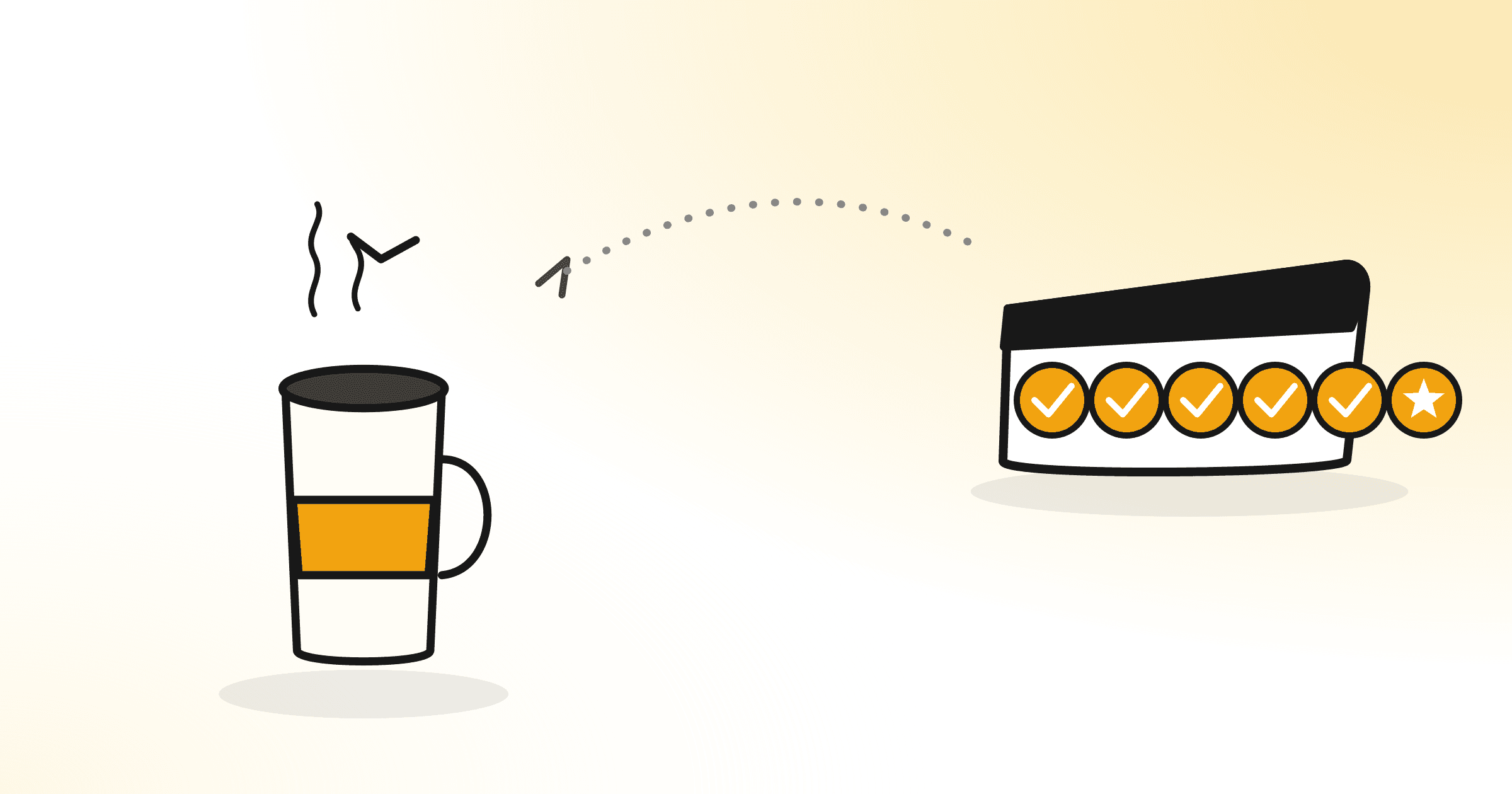
A punch card has an almost perfect logic for a café: the customer sees a goal, makes a few purchases, and gets a small reward. For example: "buy five coffees, get the sixth free." No complicated rules. No tiers. No percentages.
The customer gets a clear goal. After a few purchases they can already see their progress and don't want to start over somewhere else. This mechanic works especially well for businesses with frequent visits and a fairly consistent product — coffee shops, bakeries, breakfast spots. If a customer comes in several times a week, the reward can be reached fairly quickly.
The distance has to be the right size
A program that's too long loses its point. If someone needs to make 20 purchases just to earn one small gift, they may simply forget the program exists. At the same time, too short a distance isn't always useful either: the café ends up handing out too many rewards without getting enough extra behavior in return. So the first reward needs to be reachable.
A digital card beats a paper one for more than just being more modern
A paper card solves one task — it counts purchases. A digital one can link the purchase to the customer and show visit frequency, order totals, and behavior history. That means a simple "six coffees" mechanic can become part of a full CRM for the business. For example, a customer has collected four of six purchases and stopped coming in — the system can remind them of their progress. And unlike paper cards, which always got creased, torn, or lost, a digital card is always right there on the customer's phone, which, incidentally, lets the business remind them about itself and the program with a push notification.
The main economic question
A free product still costs money. But what matters isn't its retail price — it's the real variable cost.
If a cup of coffee sells for €3 and its variable cost is €0.70, the gift costs the business about €0.70, not €3.
But that's only part of the calculation. What really matters is how many extra purchases the program creates. If the customer would have bought six coffees anyway, the gift just cuts into profit. But if reaching the reward brought them in for two extra visits a week, the program can turn out to be very profitable.
A simple mechanic is often better than a complex one
This matters especially for a small business. If staff has to spend two minutes explaining the program to a customer, and the customer has to remember five rules, the odds of mistakes go up.
"Every sixth coffee free" is understood immediately.
So punch cards shouldn't be written off as outdated. They just don't suit every business. For a café with frequent visits and a fairly consistent average check, it's one of the most straightforward mechanics out there. And where the check size varies a lot, other options make more sense — points and cashback, for instance.
Want a loyalty program like this for your business?
Try it free for 7 days — no card required, no commitment.
Get in touch