
Loyalty Programs for Cafés and Restaurants
September 22, 2026 · 4 min read
Cashback and bonus points at a café: how to get customers to come back
How cashback in a loyalty program differs from a plain discount, how to size the accrual rate and redemption cap — and why some bonuses will simply go unused (and that's fine).
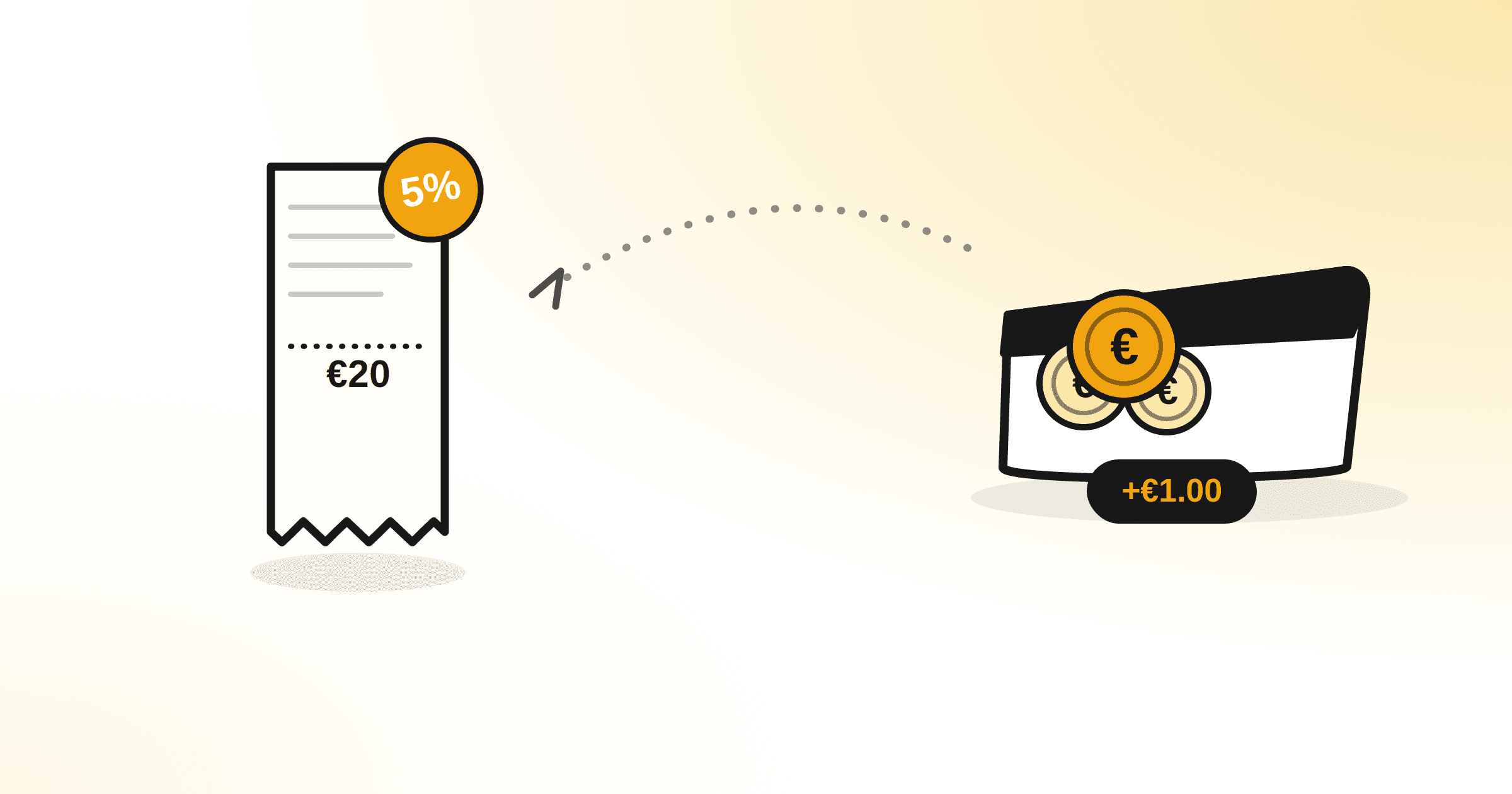
Cashback in a loyalty program differs from a plain discount in one important way: the customer doesn't get the full benefit right away.
Say a café gives back 5% in bonuses. A customer spends €20 and gets €1 credited to their bonus balance.
That €1 is meant for their next purchase.
The customer has a reason to come back
With a plain discount, the relationship with the café ends the moment the bill is paid. With cashback, part of the benefit carries over into the future. The customer now has a balance — "I've already got €1.50 in bonuses" — and even though it's virtual money, many customers don't want to lose it and will make a point of using what they've built up.
Points are more flexible than percentages
A café can, for example, award 1 point per €1 spent, then set its own rules for redeeming them. Points can fund a bonus tied to order size, a boosted rate at certain hours, extra points for a new category, or special terms for VIP customers. The important part: the rules need to stay easy for customers to understand.
What needs to be set up
A cashback program needs, decided in advance: the accrual rate, when points become available to spend, the maximum share of an order that can be paid with bonuses, an expiry period, whether it stacks with promotions, and refund rules.
For example, a café might set 5% cashback but allow no more than 30% of the next order to be paid with bonuses.
Why cashback can be cheaper than a discount
With a straight discount, the business gives up part of the value of every purchase right at the first order. With cashback, the moment part of a past purchase's value is returned happens later — whenever the bonus actually gets spent. But cashback shouldn't be treated as "free money": it's a liability the business owes the customer until the bonus is redeemed or expires under the program's own rules. That's exactly why it matters to spell out the accrual and expiry rules in detail in the loyalty program's terms.
What breakage is
Breakage is the share of issued bonuses a customer never ends up using. It can genuinely lower the program's real cost. But a business model shouldn't be built solely on the assumption that customers will forget their bonuses — a good program has to be worthwhile even when bonuses get used normally.
Cashback is especially appealing for a café whose customers come back regularly: the more often someone visits, the sooner they see the benefit of their accumulated balance. But there's no universal setting for this kind of program — it all depends on the business's goals, its product margins, and a handful of other variables. A 5% rate that's perfectly fine for one place can be too expensive for another.
So cashback rates should be worked out from margins, visit frequency, and expected sales growth — not chosen just because "that's what everyone else does."
Want a loyalty program like this for your business?
Try it free for 7 days — no card required, no commitment.
Get in touch